Lithophane: Turn a Photo into a Glowing 3D Keepsake

Some gifts get used straight away; others make people go quiet for a few seconds. A lithophane is the second kind. With the light off it looks like a white plastic panel with a faint relief. Switch on the light behind it and a photo appears, with all its shading and detail, as if the picture lives inside the plastic.
This post explains what a lithophane is, how to choose a photo that prints well, which shapes and sizes to pick, how to light it, and what to give it for. At the end you will see how to make your own with our designer.
What is a lithophane?
The lithophane is a 19th-century art form. It used to be carved in thin porcelain; today it can be 3D printed. The principle is simple: thickness controls brightness.
- Thin areas let a lot of light through, so they look bright.
- Thick areas hold the light back, so they look dark.
Software turns every point of a photo into a thickness. The result is a softly rippled surface that only "reads" as a photo when lit from behind.
So a lithophane has two faces. By day it is a neat, textured white ornament; at night it becomes a glowing photo. That is what surprises most people the first time they switch on the light.

At Snazzy 3D, lithophanes are printed in white PETG. White passes light evenly, and PETG handles heat better than PLA, so it is safer close to a lamp. Curious about the difference? Read PETG vs PLA.
How to choose a photo for a lithophane
A photo that looks great on your phone is not always a great lithophane, because a lithophane shows only shades of grey. Colour disappears; only light and dark remain. Our guide:
Pick a photo with clear contrast
Photos with a strong difference between light and dark come out most alive. Photos that are too dark (indoors at night, for example) or too washed out (lots of glare) come out flat. Daylight photos with light from the side are usually best.
Make faces large in the frame
Small faces in a group photo turn into blurry dots. For a lithophane, crop the photo until the faces fill most of the frame. One to three people is ideal. For a big family photo, choose a larger lithophane.
Avoid busy backgrounds
Trees, crowds or patterned walls drown the main subject. A plain or blurred background (portrait mode on a phone, for instance) makes faces and expressions stand out.
Use the original, high-resolution photo
Send the original file from your gallery, not a screenshot or a photo compressed by a chat app. Enough resolution keeps hair, eyes and texture smooth.
Check it in black and white
A simple trick: turn the photo black and white in your phone's gallery app. If the black-and-white version still looks good and the faces are clear, it is a strong candidate.
Lithophane shapes and sizes
The most common shapes:
- A flat panel in a frame with an LED behind it. Classic, at home on a desk or shelf.
- A curved panel: a little more dramatic, and it stands on its own.
- A cylinder lamp: the photo wraps around the light, perfect as a night light.
As for size, the bigger the lithophane, the more detail it shows, especially for photos with several people. Small sizes suit a single face or a pet. You can see the shapes and sizes on offer in the lithophane designer.
Lighting tips that bring the photo to life
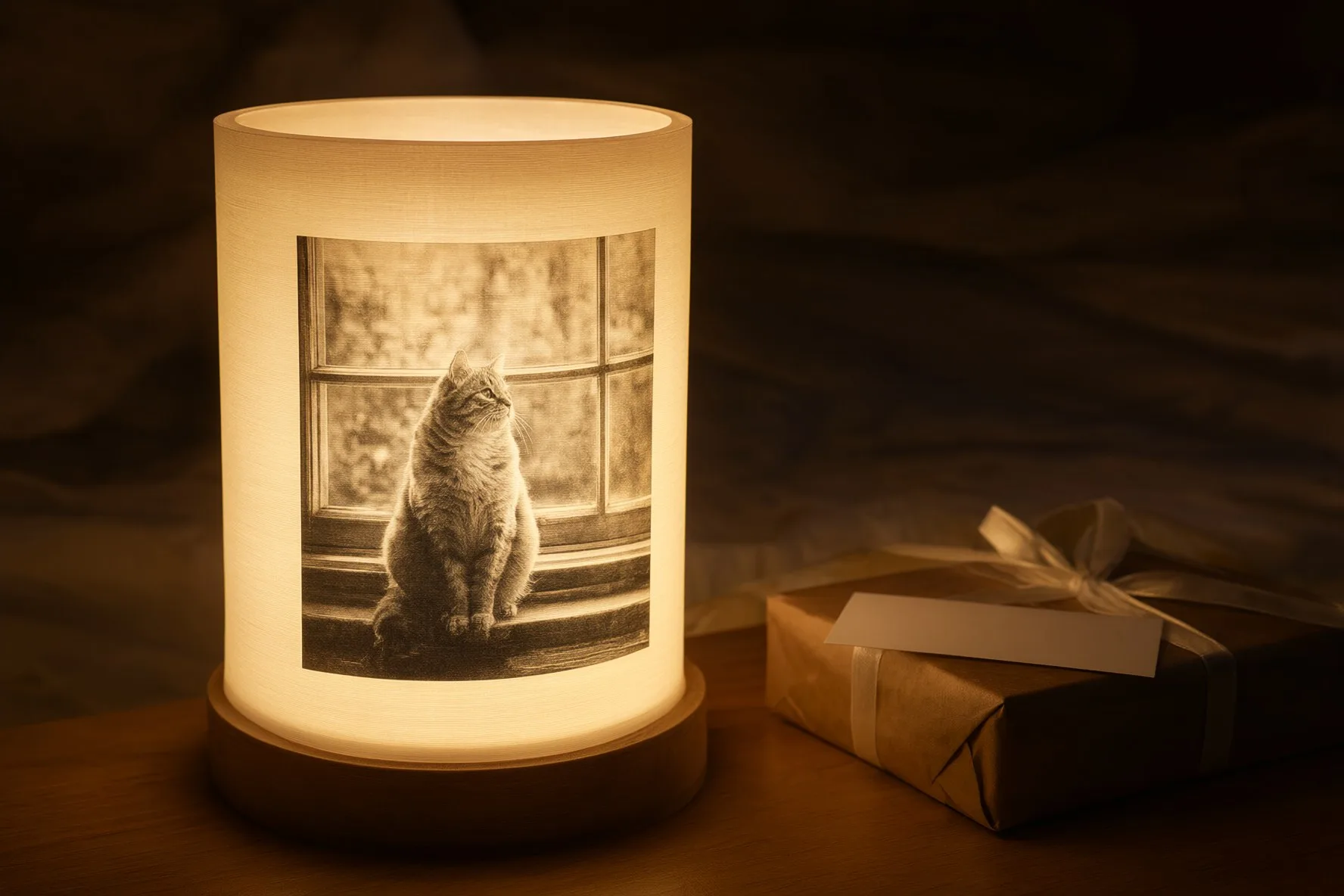
- Always use LED. LEDs stay cool, are safe for plastic and use little power.
- Light colour sets the mood. Warm white LEDs (around 2700–3000 K) give the warm look of an old photo. Neutral white gives a cleaner, sharper look.
- Light it evenly. A small light source too close creates a glaring hot spot. Leave a little distance between the light and the panel, or use a lamp with a diffuser.
- Display it somewhere not too bright. A lithophane is most beautiful in a dim room or at night. In direct sunlight the photo barely shows.
- Keep it out of long-term direct sun so the white stays clean.
Lithophane gift ideas
A lithophane means most when the photo has a story:
- Wedding anniversaries: the wedding photo, or the first photo of the two of you.
- Mother's Day or Father's Day: a childhood photo with your parents.
- A new baby: a newborn photo as a nursery night light.
- In memory of a loved one, or a pet who has passed away.
- Graduations and farewells: a photo with classmates or the team.
- Eid, Christmas or Chinese New Year: a big family photo for the grandparents.
Want a fuller gift? Pair a lithophane with a custom name sign for a child's room or a desk.
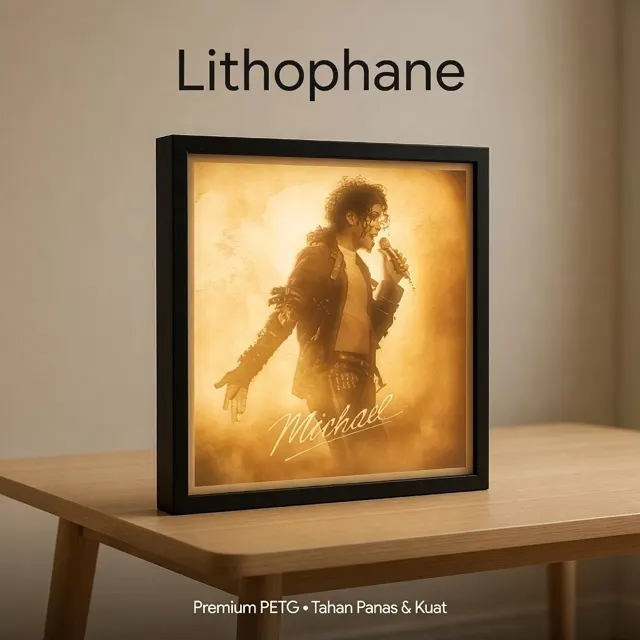
Make your own lithophane
It is easy:
1. Open the lithophane designer.
2. Upload your photo and set the part you want to show.
3. Choose the shape and size, then check the preview.
4. Add it to the cart and pay. We print it in white PETG at our studio in Jakarta.
Want to see other finished products first? Visit our shop or read the material guide.
Lithophane FAQ
Can a colour photo become a lithophane?
Yes, but the result always shows in shades of light and dark, not colour. That is why the photo's contrast and lighting matter more than its colours.
Which photos give the best result?
Bright photos with clear contrast, large faces in the frame, and a plain or blurred background. Avoid dark or blurry photos and photos with many small faces.
Can you see the lithophane when the light is off?
With the light off, a lithophane looks like a white panel with a faint relief. The photo only appears clearly when it is lit from behind.
Why are lithophanes printed in white PETG?
White passes light most evenly, which keeps the shading smooth, and PETG handles heat better than PLA, so it is safer close to a lamp.

